
Fishing in Puerto Vallarta: What Bites, When, and How Far You Have to Go
Banderas Bay drops into deep water almost within sight of the beach. A field guide to the species, the seasons, the offshore marks and the charter operation we send readers to.

Most sport-fishing destinations make you earn the deep water. You leave the harbour, you run for an hour, and somewhere out past the horizon the bottom finally falls away. Puerto Vallarta does not work like that. Banderas Bay is a submarine canyon that reaches well past 3,000 feet at its mouth, which means the serious water begins while the hotel towers are still clearly in view behind you.
That single piece of geography is the whole story of fishing in Puerto Vallarta. Cool upwelling from the open Pacific meets a warm tropical surface layer along that drop-off; bait stacks against the edge; everything that eats bait follows it in. What follows is a field guide to what lives out there, when it shows up, how far you have to travel to meet it, and how to book a boat — through Ol' Salty's Ranch, the charter operation working out of Marina Nuevo Vallarta that we point readers toward.
The Species List, Layer by Layer
It helps to think of this fishery as three concentric bands rather than a single place.
Offshore: billfish and yellowfin
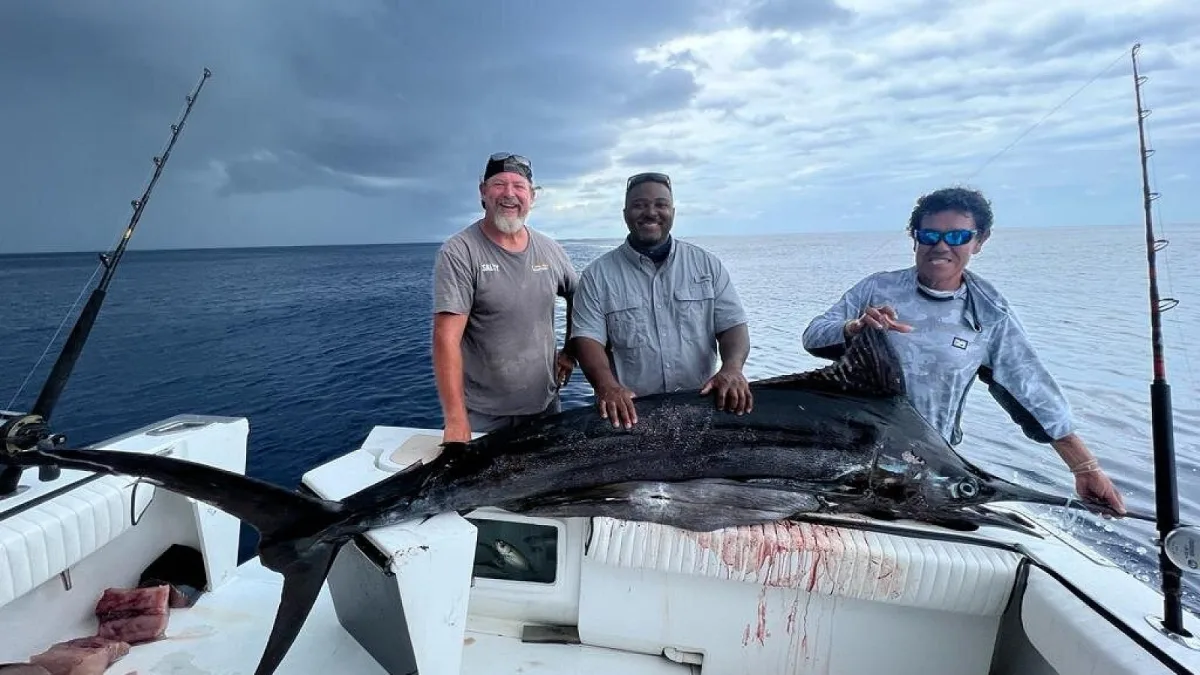
Sailfish are the signature fish of this coast — the more attainable of the two billfish and by far the better show, lit up electric blue and greyhounding across the surface. Blue and black marlin are the heavier, longer, more demanding fight and generally the product of a committed full day. Both are routinely caught and released here: brought boatside, photographed, and returned to the water without dragging the process out.
Yellowfin tuna supply the hardest straight pull of anything you are likely to hook. They range from manageable school fish to genuinely serious animals on the far banks, and they are the usual reason somebody books ten hours instead of six.
The middle band: dorado
Dorado — mahi-mahi — sit between the two worlds and are the fish most people fall for. Fast, acrobatic, absurdly coloured, and the best eating on the list. They hold around floating structure, so a captain who reads weed lines and drifting debris matters more here than expensive tackle does.
Inshore: the layer that saves the trip
Bonito, jack crevalle, roosterfish, snapper and sierra live close in, and this band is more important than the glamour photographs suggest. Bonito come steadily and pull hard, which makes them the ideal first fish for a child or a nervous first-timer. A four-hour charter inside the bay is not a consolation prize; for a lot of groups it is the correct booking.
The Seasons, Honestly
The useful headline is that this bay fishes twelve months a year, which is not true of most destinations. What changes is what is likely.
May to November — the offshore window
Warm water, and the classic season for sailfish, marlin, dorado and yellowfin on the outer marks. Late summer into autumn is when the banks are at their best and when travelling anglers plan their trips. September and October carry the highest chance of a weather day, so if you have a short holiday, build in a spare morning.
December to March — whales, and steadier inshore
Offshore action softens as the water cools, but this is when humpback whales fill Banderas Bay to breed and calve, and the inshore fishing stays perfectly good. The move most groups make is the combined day: troll while watching for whales, shut everything down when whales appear, then fish again on the way home. It is why the operator sells whale watching as a pairing rather than a separate product. If whales are the priority, our guide to whale watching in Banderas Bay covers the season in detail.
April and the shoulder
Warming water, thinner crowds, and a transition month that regularly fishes better than its reputation. Good value if your dates are flexible.
Two caveats worth more than any calendar. Ask the captain what has been happening this week, because conditions here move faster than months do. And if one species is the entire point of your trip, say so at booking, so the hours and the route are built around it.
The Marks: Where the Hours Take You
This is the part that makes booking straightforward once you understand it. You are not buying a destination — you are buying hours, and the hours buy distance.
- 4–6 hours — inside Banderas Bay. Calm water, short runs, real fish. More of your paid time is spent with lines in the water than you would guess, because so little of it is spent travelling.
- 6–8 hours — just outside the bay. Roughly five to eight miles beyond the mouth. Bigger average fish, and a realistic shot at dorado and tuna without committing to a full day at sea. For most visiting anglers this is the sweet spot.
- 8–10 hours — Corbeteña. A rock pinnacle rising out of deep water northwest of the bay, and the best-known mark on this coast. Structure that abrupt concentrates bait, and bait concentrates everything else.
- 10+ hours — El Banco. The furthest the fleet runs in a single day: an offshore seamount out past Corbeteña with a reputation for big tuna and billfish.
- Multi-day — one to three days at sea. Aboard Steel n Time only, the one boat in the fleet that sleeps guests. This is how you fish the distant grounds at first light instead of burning the morning on the run out.
Trips well beyond the bay carry a fuel surcharge, so ask for the all-in number when you book a Corbeteña or El Banco day.
The Boats
Rates are per boat, per hour — nothing is charged per angler, which means the day gets cheaper per head as your group grows. You can compare the fleet in full, but in short:
Guanatuna — 34-foot Gulfstream, twin turbo 250 HP Cummins diesels, Raymarine GPS, radar and fish finder, up to 15 guests at 3,200 MXN an hour. Full shade over the main deck with cushioned lounge seating, open bow for sun. The right boat when not everyone aboard is fishing.
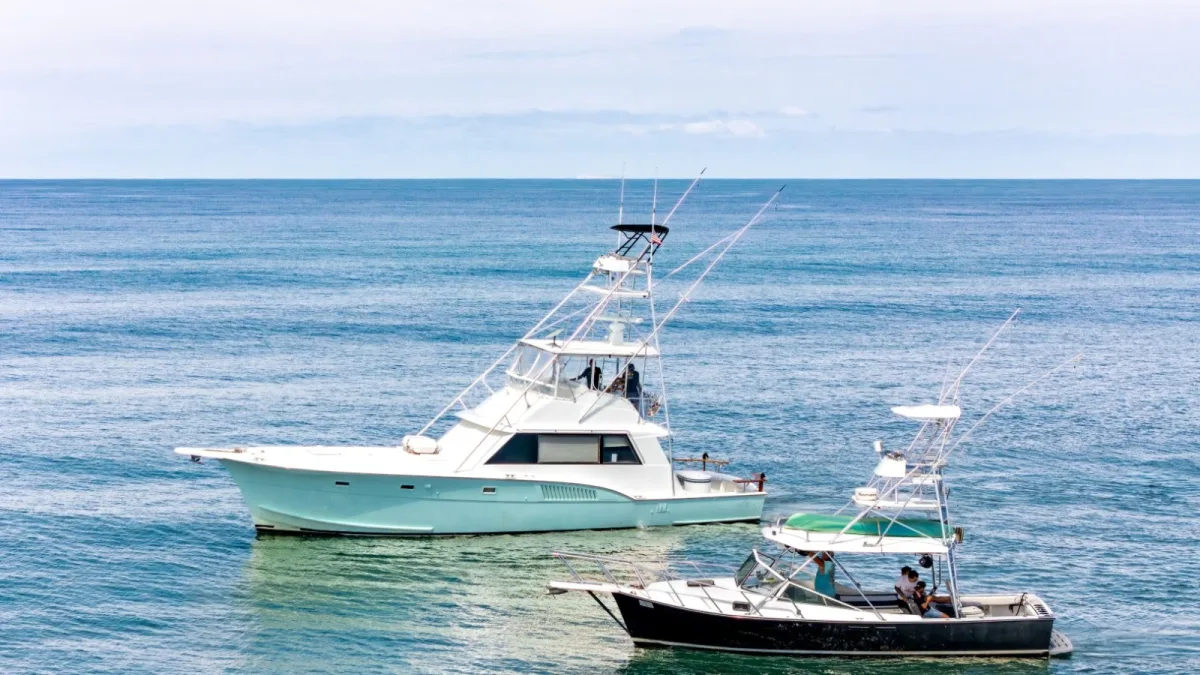
Peaceful Easy Feeling — 32-foot super panga, twin Mercury 300 HP outboards, Furuno GPS and fish finder, up to 8 guests at 4,000 MXN an hour. The fast one; on a long-range day, speed is not vanity, it is minutes of fishing you keep.
Steel n Time — 53-foot Hatteras, twin Detroit diesels at 900 HP, Furuno GPS, sonar, radar and fish finder, three air conditioners, salon, two bathrooms, berths for eight, up to 22 guests at 7,000 MXN an hour. The big-water, big-group and only multi-day boat.
What Is Included
Captain and crew, rods, tackle and bait, life jackets, bottled water and ice, and a bathroom aboard all three boats. On a fishing day the captain works from the tuna tower — spotting fish, birds and whales long before anything is visible from deck level — while the mate rigs the spread and puts the rod in your hands the moment something hits.
Not included: a fishing licence if one is required for your catch, food and alcohol, and the fuel surcharge on extended-range trips. Bring whatever you want to eat and drink; there is ice aboard.
The Captain Is the Variable
Anyone can rent you a hull. What decides whether you catch fish is the person driving it, and the gap between a captain who knows where the bite was on Tuesday and one who runs the same waypoint every morning is enormous. It is also why being specific at booking pays: "we want a sailfish" and "we want the kids to catch something" are two different routes, two different tackle setups and two different departure times.
Fishing Is Rarely the Whole Day
Because you rent the boat instead of buying a seat, most charters here mix things up. The commonest day the operator runs folds three activities together: troll while watching for whales, stop for the whales, then fish again on the way to a beach for the last stretch of the afternoon. The usual anchorages are Los Arcos for snorkelling and Las Ánimas for lunch on the sand; there is a page for every beach destination the boats reach. If a mixed day is what you want, our guide to boat tours and yacht charters sets out the alternatives.
Reading the Bay Before You Book
Two habits separate people who catch fish here from people who go for a boat ride.
The first is asking about this week rather than this month. Seasonal tables are averages, and averages are not what you are fishing in. A single week of wind, a shift in water temperature or a bait school moving north changes everything, and the captain knows all three. A five-minute conversation before you commit to eight hours is worth more than any calendar.
The second is booking early in your stay rather than late. Cancellation is free up to 24 hours ahead and the call on marginal weather belongs to the captain, so an early booking gives you somewhere to move to if the sea says no. Anglers who book the last morning of the holiday have no second chance.
Is a Private Charter Worth It?
The arithmetic is simple once you know the rates are per boat. A four-hour charter on Guanatuna is 12,800 MXN for the whole vessel. Split among four that is 3,200 MXN each; split among ten, roughly 1,280 MXN each — for a private boat, a private route and a crew working for your group alone.
Below about four people, a shared group tour is usually cheaper and there is no shame in taking one. From six upward the private charter tends to win on money and always wins on control: your departure time, your target species, your anchorage, your music, and the freedom to stay on a school of dorado for another forty minutes because they are still biting. That flexibility is the actual product; the fish are a bonus.
Practical Notes
Getting there. Departures are from Marina Nuevo Vallarta: about fifteen minutes from the airport, ten from Bucerías, thirty to forty from the Zona Romántica depending on traffic. For a 7:00 a.m. departure, leave a margin.
What to bring. Reef-safe sunscreen, a hat and polarised sunglasses — the polarisation is not a style note, it genuinely lets you see into the water. A light long-sleeve layer for the run out, cash if you plan to tip the crew, and a cooler bag if you want fish to take home.
Seasickness. Take something before you leave the dock. Taken afterwards it is largely decorative.
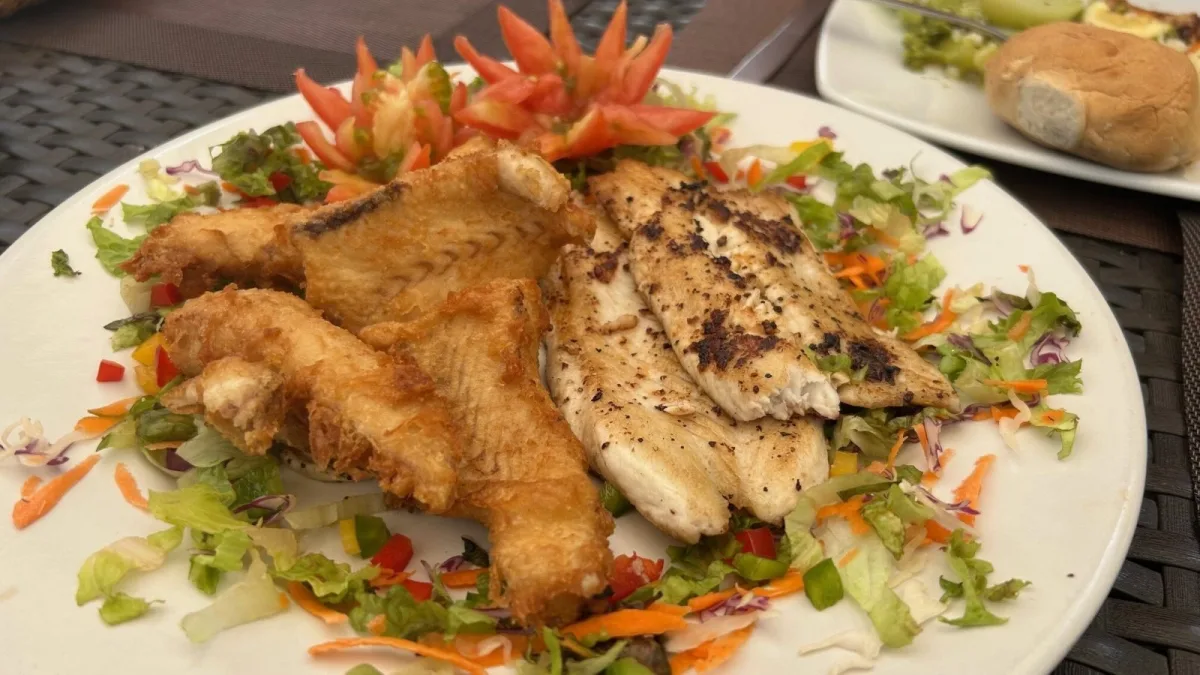
Your catch. Billfish go back in the water. Dorado, tuna and bonito are yours, cleaned by the crew at the dock, and half the restaurants around the marina will cook them for you if you walk in holding a bag.
Booking. Four-hour minimum, hourly extensions, departures 7:00 a.m. to 7:00 p.m., 30% deposit, free cancellation up to 24 hours ahead. Everything is on the fishing charter page.
FAQ
What fish can you catch in Puerto Vallarta?
Sailfish, blue and black marlin, dorado (mahi-mahi), yellowfin tuna, bonito, jack crevalle, roosterfish, snapper and sierra. The billfish and larger tuna come from the offshore marks such as Corbeteña and El Banco; the inshore list is what makes a short trip inside the bay worth doing.
When is the best time of year for fishing in Puerto Vallarta?
Banderas Bay fishes all twelve months. Roughly May through November is the warm-water offshore window for billfish, dorado and tuna. December to March is quieter offshore but brings humpback whales into the bay, so most groups combine fishing with whale watching in winter.
How much does a private fishing charter cost?
With Ol' Salty's Ranch the rate is per boat per hour rather than per angler: 3,200 MXN for Guanatuna (15 guests), 4,000 MXN for Peaceful Easy Feeling (8 guests) and 7,000 MXN for Steel n Time (22 guests), with a four-hour minimum.
How far offshore do you have to go?
It follows from the hours you book. Four to six hours stays inside Banderas Bay, six to eight goes five to eight miles outside it, eight to ten reaches Corbeteña, and ten or more reaches El Banco. Multi-day trips of one to three days run aboard Steel n Time, the only boat in the fleet with berths.
Do you need a fishing licence in Mexico?
Mexico requires a sport fishing licence for anglers aboard a sport fishing vessel, and it is listed as not included in the hourly rate. Ask the operator at booking whether they arrange it for your group or whether you buy it yourself.
Where do the charters leave from?
Marina Nuevo Vallarta, on the Nayarit side at the north end of the bay — about fifteen minutes from Puerto Vallarta international airport, ten from Bucerías and thirty to forty from the Zona Romántica. Departures run between 7:00 a.m. and 7:00 p.m.
Related Articles

Boat Rental by Owner vs. Yacht Broker in Puerto Vallarta: A Side-by-Side Comparison
Two ways to put a private yacht under you on Banderas Bay: call a broker or deal straight with the owner. We compared them line by line — price, choice, accountability, flexibility — using the real Puerto Vallarta fleet.

Catamaran Season on Banderas Bay: Why the Cat Became the Boat of Puerto Vallarta
Two hulls, a trampoline and a certificate for 23 guests: how the sailing catamaran took over the bay, the owner-direct fleet boat by boat, and when it is the wrong choice.

The 100-Fathom Curve: Where Puerto Vallarta's Sportfishing Actually Happens
Twenty miles off Marina Vallarta the seafloor drops away and the marlin, sailfish, tuna and dorado stack up on two underwater mountains. A feature on the geography, the seasons and the fleet that fishes it.

Book Direct: How Owner-Direct Yacht Charters Are Changing Puerto Vallarta's Marinas
A dockside look at why Banderas Bay grew the biggest charter fleet on the Mexican Pacific, what booking with the owner instead of a broker changes, and what the numbers look like without the middle layer.