
Home Inspection in Puerto Vallarta: Why Coastal Homes Age Differently
Salt, sun and the rainy season leave marks on every Vallarta building. We look at how local homes age and how a home inspector reads them before you buy.

In this guide
- A Town Built of Concrete, Water Tanks and Sky
- Salt Air: The Slow Chemistry on Every Balcony
- What the inspector looks for
- Sun and Heat: The Roof Takes the Hardest Hit
- Signs on the roof
- The Rainy Season Writes the Story
- After the big storms
- Hidden Systems: Water, Gas and Wiring Behind the Walls
- Water that disappears
- Gas lines in salty air
- Wiring that grew organically
- Beachfront, Hillside, Riverside: Where the Clues Change
- On the sand
- On the slopes
- Near the river and the marina
- How an Inspector Reads a Building
- Different buildings, different readings
- Living With a Coastal House
- Let Someone Read the House for You
- References & useful links
Stand on any rooftop in the Zona Romántica at dusk and you can read the town’s weather history in the buildings around you. Black streaks under parapets, rust blooms on balcony edges, patched membranes in three shades of red and white. Vallarta is beautiful, but it is also hard on houses, and anyone buying one should understand how the coast quietly works on concrete, steel and glass. That is where a home inspection in Puerto Vallarta earns its place: it translates those marks into plain language before you commit to a property.
In this feature we look at the forces that shape local homes — salt, sun, rain and the way houses are built here — and at how an experienced inspector moves through a building, reading the clues one by one.
A Town Built of Concrete, Water Tanks and Sky
The typical Vallarta house is not a timber frame with a pitched shingle roof. It is a box of reinforced concrete, with block or brick walls, topped by a flat slab — the losa — that doubles as a terrace, a laundry area or a sunset deck. Up there you will usually find a tinaco, the plastic or fiberglass water tank that feeds the house by gravity, and sometimes a solar water heater. Below ground, many homes add a cisterna, an underground tank, with a pump and pressure tank pushing water to the taps. Kitchens and hot water run on LP gas from a stationary tank or cylinders, and electricity arrives from CFE.
It is a sensible way to build in the tropics. Concrete does not rot, termites cannot eat it, and a flat roof is useful living space. But every one of those elements has its own way of aging, and none of them ages the way buyers from colder places expect.
Salt Air: The Slow Chemistry on Every Balcony
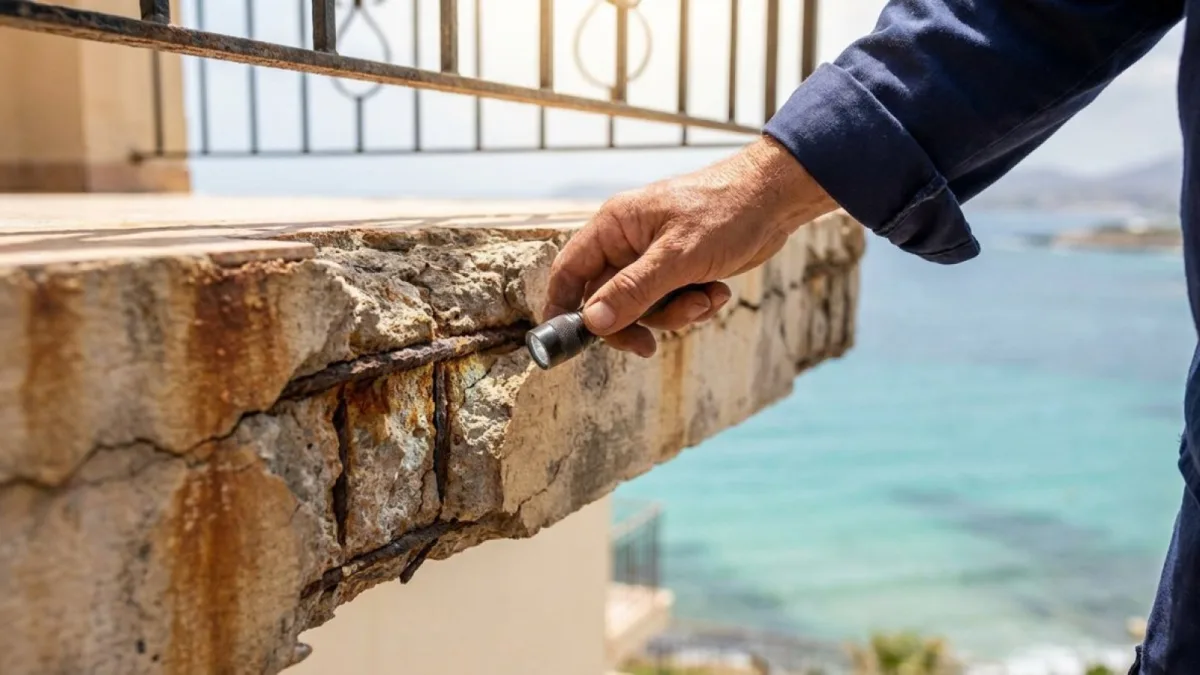
Close to the beach, the breeze carries a fine mist of salt. It settles on railings, window frames and exposed concrete, and over time chlorides work their way into the material. Reinforced concrete depends on the steel bars inside staying protected. Once moisture and salt reach that steel, it begins to rust — and rust takes up more space than the steel it replaces.
The result is spalling. The expanding rust pushes the concrete cover outward until it cracks and falls away, exposing the bar. It shows up first where the building is thinnest and most exposed: balcony slab edges, the corners of columns, the lip of a terrace facing the sea.
What the inspector looks for
- Brown rust stains bleeding through paint, often in straight lines that follow the rebar.
- Hairline cracks running parallel to slab edges.
- Concrete that sounds hollow when tapped.
- Pitted aluminum window frames and sliding-door tracks, and seals that have hardened or split.
Spalling caught early is a repair. Spalling ignored becomes a structural conversation. A home inspector in Puerto Vallarta who has also worked as a builder can tell the difference and explain what the fix involves.
Sun and Heat: The Roof Takes the Hardest Hit
A flat concrete roof in Vallarta spends most of the year under intense sun. The waterproofing membrane on top — the impermeabilizante — expands in the afternoon heat and contracts at night, again and again. Eventually it blisters, cracks along joints and pulls away at parapets and drains.
That matters because the roof is the umbrella for the whole house. When the membrane fails, rainwater sits on the slab, finds a crack and travels. It rarely drips straight down; it wanders, so a stain in a bedroom ceiling may start several meters away. Failed roof and terrace waterproofing is the most common source of interior humidity that inspectors document around the bay. Owners who discover it usually end up calling a specialist in terrace waterproofing in Puerto Vallarta.
Signs on the roof
- Bubbles or blisters in the membrane.
- Low spots where water ponds after rain.
- Cracked parapets and loose flashing.
- Drains clogged with leaves, sand or old membrane.
- A tinaco base or solar-heater mount that has broken the waterproof layer.
The Rainy Season Writes the Story
Most of Vallarta’s annual rain falls between roughly June and October, often in short, heavy evening storms. The same months overlap with the Pacific hurricane season, which runs from May 15 to November 30. For a house, that means months of near-constant humidity followed by sudden torrents of water hitting every weak point at once.
Humidity is patient. It collects behind wardrobes pushed against exterior walls, inside closets with no airflow, at the base of walls where water wicks up from the floor. Mold follows. Sellers sometimes repaint before listing, which makes a room look fresh for a few weeks. An inspector armed with an infrared camera can see through that: an infrared moisture inspection in Puerto Vallarta picks up the cooler patches where damp is hiding behind fresh paint.
After the big storms
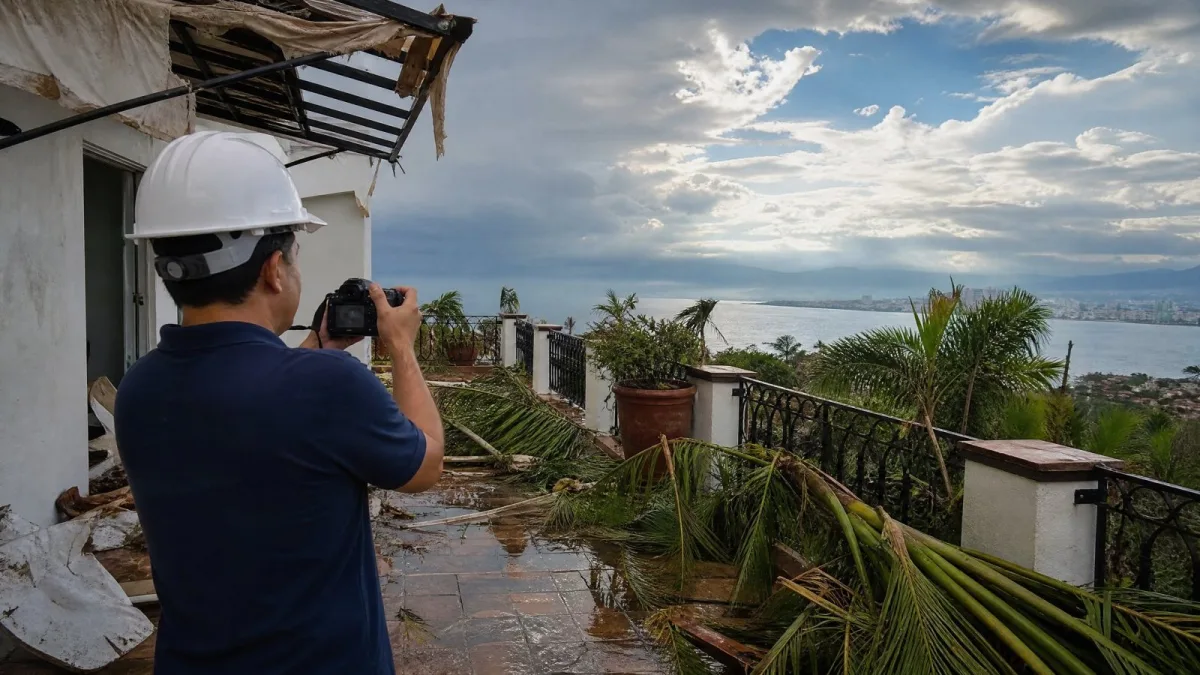
When a hurricane or tropical storm passes close, damage is not always obvious. Fallen palm fronds and debris are easy to sweep away; a cracked window seal or a lifted membrane edge is not. A post-hurricane inspection in Puerto Vallarta documents what changed, and owners can prepare with this hurricane damage checklist for Puerto Vallarta homes.
Hidden Systems: Water, Gas and Wiring Behind the Walls
The parts of a Vallarta house that age most quietly are the ones you never see.
Water that disappears
Tinacos crack in the sun. Cisterns leak into the soil. Pumps and pressure tanks wear out, and a household that once had strong pressure on the upper floor ends up with a trickle. Hidden leaks inside walls or under floors can run for months, showing up only as a high water bill or a damp patch that never dries.
Gas lines in salty air
LP gas lines corrode like any other metal near the coast. Inspectors also find regulators that do not suit the installation, and water heaters closed into small rooms with no ventilation — a safety issue, not a cosmetic one.
Wiring that grew organically
Many homes have been extended and remodeled by several owners. The electrical system often tells that story: missing ground connections, mixed wire gauges, panels carrying more circuits than they were meant to, exposed splices and no GFCI protection near water. These are the findings that turn up in nearly every list of red flags to look for in a Puerto Vallarta home.
Beachfront, Hillside, Riverside: Where the Clues Change
Geography shifts the emphasis of every visit. The same house would tell a slightly different story in each corner of the bay.
On the sand
Condos and villas right on the beach — in the Hotel Zone, along Los Muertos or up the coast in Nuevo Vallarta and Bucerías — take the full force of salt spray. Here an inspector spends extra time on balcony edges, railings, aluminum frames and anything metal on the roof.
On the slopes
Hillside homes in Amapas, Conchas Chinas and the streets above Centro trade some salt for gravity. Rain runs fast down steep streets and terraces, so slopes, drains and the way water leaves the property get close attention, along with roof access, which is often tricky on a stacked, multi-level house.
Near the river and the marina
In Fluvial, Versalles and around Marina Vallarta, the air stays heavy with moisture through the summer. Ventilation, closets on exterior walls and the condition of mini-split condensate drains become part of the reading.
How an Inspector Reads a Building
Watch a skilled inspector work and it looks less like a checklist and more like detective work. The roof explains the ceiling stain. The ceiling stain explains the swollen door frame. The swollen frame explains why the sliding door sticks. Each clue points to the next.
That is why we recommend PVR Contractors to readers looking for home inspection Puerto Vallarta help. The company is a general contractor that builds, remodels and maintains properties around Banderas Bay, and its inspection division brings a builder’s eye to each visit. Its bilingual inspector delivers a digital photo report in English, Spanish or both, organized by system, with photos, location, a priority level (safety, urgent, maintenance or monitor) and a recommended solution for every finding. Because the firm also builds, it can give approximate repair costs for the main items — and buyers remain free to hire any contractor they like.
Different buildings, different readings
- Resale homes and villas get the full treatment through a pre-purchase home inspection in Puerto Vallarta.
- Apartments call for a condo inspection in Puerto Vallarta that also reads the visible state of the façade, roof, water system and parking slab — clues to whether a special HOA assessment might be on the horizon.
- Brand-new units benefit from a pre-sale delivery inspection in Riviera Nayarit or in Vallarta itself, producing a punch list for the developer before you accept the keys.
Living With a Coastal House
None of this should put anyone off. Every home on the bay ages, and the ones that age well are simply the ones that get looked after. Roofs get resealed before the rains, pumps get serviced, salt gets rinsed off railings, small cracks get patched before they grow. Owners who are away for part of the year often lean on home maintenance plans in Banderas Bay, or bring in a home maintenance contractor in Puerto Vallarta when the to-do list gets long.
For buyers, the lesson is about timing. In Mexico the notary verifies title, liens and taxes, but nobody checks the physical condition of the house, and sales are generally made as is. The right moment for an inspection before buying a house in Puerto Vallarta is before or while you sign the promise contract, within the due-diligence window your agent negotiates. Our own guide to buying property in Puerto Vallarta covers the legal steps around that moment, and if the report leads to renovation work, read our notes on hiring a construction contractor in Puerto Vallarta.
Let Someone Read the House for You
The marks on a Vallarta building are a language, and it pays to have a fluent reader on your side. Send the address and approximate square meters to PVR Contractors by WhatsApp at +52 322 301 6727 for a fixed quote, usually the same day. On-site time runs around two to three hours for a condo and roughly three to five for a house or villa, you are welcome to come along, and buyers abroad can follow by live video. Book a home inspection in Puerto Vallarta and find out what the salt, sun and rain have already written on the house you love.
References & useful links
Sources for this article. The services, report format, on-site times and coverage described above come from these PVR Contractors pages:
- PVR Contractors — home inspection in Puerto Vallarta — pvrcontractors.com/home-inspection-puerto-vallarta/
- Pre-purchase home inspection in Puerto Vallarta — pvrcontractors.com/home-inspection-puerto-vallarta/pre-purchase-home-inspection/
- Storm damage inspection in Puerto Vallarta — pvrcontractors.com/home-inspection-puerto-vallarta/storm-damage-inspection/
- Home inspection red flags in Puerto Vallarta (PVR Contractors blog) — pvrcontractors.com/blog/home-inspection-red-flags-puerto-vallarta/
- Request an inspection quote: contact form — pvrcontractors.com/contact/
- WhatsApp PVR Contractors (322) 301 6727 — wa.me/523223016727
Frequently asked questions
Why do homes in Puerto Vallarta need a different kind of inspection?
Most homes are reinforced concrete with flat roofs, rooftop water tanks and often cisterns, and they live with salt air, strong sun, heavy summer rain and hurricane season. Those conditions create specific problems, such as failed waterproofing and rebar corrosion, that an inspector focuses on.
What is concrete spalling?
Spalling happens when the steel bars inside reinforced concrete rust. Rust takes up more space than steel, so it cracks the concrete and pushes pieces off, exposing the bars. Near the beach it is common on balcony edges, columns and slab edges.
What is the most common cause of humidity inside Vallarta homes?
Failed roof and terrace waterproofing. Blistered membranes, ponding water, cracked parapets and clogged drains let rain into the slab, and it often appears as stains or mold in rooms below.
Can a thermal camera find moisture hidden behind fresh paint?
An infrared camera shows temperature differences, which can reveal hidden humidity behind finishes and hot spots in electrical panels. PVR Contractors offers a thermal imaging inspection for this purpose.
Should a house be inspected after a hurricane?
It is a good idea. Storm damage to window seals, waterproofing and roofs is not always visible. PVR Contractors offers a storm damage inspection to document what changed after a major storm.
When is the best time to inspect before buying?
Before or while signing the promise contract, within the due-diligence window your agent negotiates. If possible, booking before the rainy season leaves time to schedule repairs, and a visit during or just after rain can make active leaks easier to spot.
How do I get a quote for an inspection?
Send the property address and approximate square meters to PVR Contractors by WhatsApp at +52 322 301 6727 or through its contact form. They reply with a fixed quote, usually the same day.
Keep reading
More in Services
Top 10 Legal Services in Puerto Vallarta for 2025
From beachfront purchases to residency cards and Mexican wills, these are the firms foreign residents rely on in Puerto Vallarta — and the one that handles nearly all of it under one roof.

Buying Property in Puerto Vallarta: An Editorial Guide to the Fideicomiso, Zones, and Real Costs
How foreign buyers actually purchase real estate in Puerto Vallarta — the fideicomiso trust, working with a licensed AMPI agent, real closing costs, and the zones worth touring first.
The Puerto Vallarta Website Trap: What to Know Before You Hire a Web Design Agency
A beach town this popular attracts business owners fast — and web design agencies faster. Here's how to tell a real, PV-savvy studio from a template shop before you sign a contract.